Monday, July 25, 2011

Inspirational Quote Of The Week


"Our Greatest Glory is not in never failing but in rising
up every time we fail"
                       - Ralph Waldo Emerson

Friday, July 22, 2011

What is a design? IP Part 3


Diva Chair
collection from Colico Design


What is a design?

Design refers to thefeatures of shape, configuration, pattern or ornamentation which, when appliedto a product, gives the product a unique appearance.

You can register a designbut it must be new and distinctive.

A registered design can bea valuable commercial asset. Once your registered design is examined andcertified, you have the exclusive and legally enforceable right to use, licenseor sell your design.

Pleasenote:

Design registration isintended to protect designs which have an industrial or commercial use. Designs which are essentially ARTISTIC WORKS are covered by copyright legislation and ARE NOT ELIGIBLE for design registration. The protection you receive is onlyfor the visual appearance of manufactured products, not how it works.

Durationof protection

Registration initiallyprotects your design for five years. You can then renew the registration for afurther five years.

Who administers designs?

Applications should befiled with the designs section of IP Australia. They will assess whether yourinvention is new and if it meets the legislative requirements.

Copyright protects theoriginal expression of ideas, not the ideas themselves. It is free andautomatically safeguards your original works of art and literature, music,films, sound recording, broadcasts and computer programs from copying andcertain other uses. Copyright is not registered in Australia.

Material is protected fromthe time it is first written down, painted or drawn, filmed or taped. Copyrightmaterial will also enjoy protection under the laws of other countries who aresignatories to the international treaties, of which Australia is a member.

Copyright protection isprovided under the Copyright Act 1968 and gives exclusive rights to licenseothers in regard to copying the work, performing it in public, broadcasting it,publishing it and making an adaptation of the work. Rights vary according tothe nature of the work. Those for artistic works, for instance, are differentto those for literary and musical works.

Although making copies ofcopyright material can infringe exclusive rights, a certain amount of copyingis permissible under the fair dealing provisions of the legislation.

Copyright doesn't protectyou against independent creation of a similar work. Legal actions againstinfringement are complicated by the fact that a number of different copyrightsmay exist in some works - particularly films, broadcasts and multimedia products.

To Learn more about IP, Please visit IP Australia

Tune in next Friday for Part 4: "What is A Copyright?"

Previous Post:


What is a Trade Mark? IP Part 2


Thursday, July 21, 2011

Let Google Goggles be your eyes!


Have you heard of Google goggles?

I have recently downloaded a Google goggles apps for my Iphone and it's amazing. You can also get the app for Android phones as well.

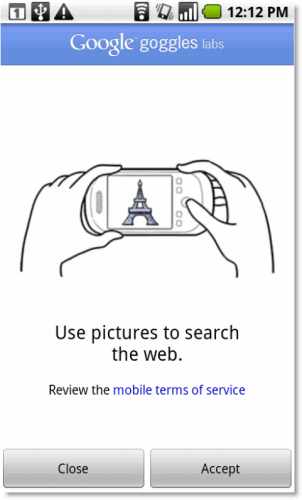
Google Goggles lets you use pictures taken with your mobile phone to search the web. It's ideal for things that aren't easy to describe in words. There's no need to type or speak your query - all you have to do is open the app, snap a picture, and wait for your search results.

You can also seek by voice activation. All you have to do it open the app and talk to it for example Best Italian Restaurant in Sydney, and wait for  your search results.

Best search queries

Google Goggles works better with certain types of queries. It can recognize up to three items at a time. For best results, try taking pictures of the following:
  • Books & DVDs
  • Landmarks
  • Barcodes & QR codes
  • Logos
  • Contact info
  • Artwork
  • Businesses
  • Products
  • Text
Currently, it's not so good when taking pictures of the following:
  • Animals
  • Plants
  • Cars
  • Furniture
  • Apparel
Here's a Youtube video about Google goggles:


Optimizing your photos for Goggles

For the best results when taking pictures, hold your phone in "left landscape" mode, as shown below, and press the on-screen shutter button with your right thumb.
intro screen

Source & Images from Google

How to write an elevator speech?


An Elevator Speech is definitely not a "sales pitch."  Don't get caught up in using the entire speech to tell people how great your product or service is. The objective of an elevator speech is to capture your audience's attention and to get them to engage in a conversation and finding out more about your business and what you do.
 Here's something to consider when you write your own "Elevator Pitch"
  1.  Who are you & your business?
     
    Tell people a little about you and your team. Brief about your team background and achievements.
  2.  What is your product or service?
    Briefly describe what it is you are selling and the service that you are offering. Keep it brief and concise.
  3. Who is your target market?
    Briefly discuss who you are selling the product or service to.  What industry is it?  How large of a market do they represent?   
  4. Who are your competitors?
    Briefly discuss who they are and what they have accomplished.  Successful competitors are advantages, they are proving your business model is working.
  5. What is your quirk or niche?
    You need to effectively communicate how your business is different and why you have an advantage over your competitiors.  A better distribution channel?  Signature style?  Unique Products? etc.
  6. Is your speech fresh and up to date?
    Every business grows and changes, and your speech also needs to reflect that too. You can have the most creative logo, the most dazzling brochures, and the most cutting-edge Web site, but if your elevator speech is stale and obsolete, you're missing one of your most important opportunities to promote and brand your business.
  7.  Are you prepared and ready??
    Continually perfecting the elevator speech ensures that you are always able to put your best foot forward as your business grows and changes and your client base expands. Do your homework on your potential clients and adjust your elevator speech to match and how you can add value to their business.  Also make sure you change the way you speak and present about your business. Your language, your approach, and what you choose to highlight for a particular audience has got to change accordingly too.
  8. When was the last time you reviewed your speech?
You are the best person for your business so you know your business better than anyone else. Remember these questions when your time comes to review your Elevator Speech.
  • How I am keeping abreast of the latest ideas? 
  • What continues to set my business apart from my competition?
  • How can I speak about my record of quality goods and services and make it relevant to my future plans?
  • How do I bring excitement and spark interest to those outside my organization? 
Next action:
  1.  Make a quick note  of what you do and the nature of your business
  2. Now Write your elevator speech
  3. Practice your speech with friends & Family
  4. Use the speech in your next social network function 
Please leave a comment if you have done one and tell us how use it ?


Image Source:


San Diego Law Library


Wednesday, July 20, 2011

Do you Have an Elevator Speech Ready ?


What is an elevator Speech?


An elevator speech or pitch  is a short summary used to quickly and simply define a product, service, or organization and its value proposition. The name "elevator speech" reflects the idea that it should last no longer than the average elevator ride or approximately thirty seconds to two minutes.

One of the first things we ask our clients during their first discovery coaching session is this question:

So, what do you do?

Did you know that most business owners struggle to identify in half a minute what it is their business actually does?

Most of them give some basic information about what their business is doing on a day to day basis without really identifying exactly what the real purpose of their business really is about. 

Remember first impressions count in this situation. Given that we normally perceive what we think about someone in the first 10 seconds of connecting with them, it's reasonably important to get it right... THE FIRST TIME! 

Now’s the time to get crystal clear on WHY and WHO you are, and WHAT you want to be known for.

It is essential to get very clear on what it is that you do. And what you offer... 

By having your "elevator speech" ready is a critical part of your art & Design business. It should be no more than 30 seconds and should relay to the listener enough information that they can get what you do, and be open to asking a question about that when you finish.


Next Action:

Your task today is to gather information about you, your business, product and service that you would like to share with people you would like to connect with in your business and social networks.

Tune in for next tomorrow:

  "How to write an Elevator Speech for your Art & Design Business"


Monday, July 18, 2011

WEEK 8: Preventing Injuries


Fitness Coach Kmaru


Good morning,

Have you taken your breakfast yet?

You should because it is the most important nutritional meal of the day. A healthy diet plan can promote weight loss, reduce the risk of coronary artery disease, reduce the risk for stroke and other cardiovascular diseases, aids your body for training and the prevention of injuries

In our previous session we focused on resistance training, by combining them with your favourite outdoor activities it can be fun, but they can also be dangerous if you are not careful. You can help prevent injuries by

* Getting a physical test  to make sure you are healthy before you start playing your sport
* Wearing/ choosing the right shoes, gear and equipment
* Drinking lots of water
* Warming up and stretching
* Adequate recovery
* Nutrition


Injury to the body is painful and often a debilitating experience. It affects you psychologically as well as physiologically, impacting significantly on your work and lifestyle. An injury can range from a simple acute haematoma to a chronic, constant pain injury such as tennis elbow.

Common Injuries

Exercise should provide a moderate and gradual increase of stress to the skeletal muscle system. Overuse can lead to a variety of common injuries because you are not allowing time for your body to heal. You can increase the progress towards your fitness goals by avoiding injuries that will become obstacles in your training regime. Some common injuries can include:
·  Muscle Soreness
·  Sprains
·  Fracture
·  Tendonitis
·  Lower back pain

Managing Injuries

If you get hurt, stop exercising!  Continuing to exercise can cause more harm. Treatment often begins with the RICER (Rest, Ice, Compression, Elevation, Referral) method to relieve pain, reduce swelling and speed healing. Other possible treatments include pain relievers, keeping the injured area from moving, rehabilitation and sometimes surgery.


If you have already hurt yourself from training/playing a sport in the past, make sure you recover completely before you start up again. If possible, protect the injured part of your body with padding, a brace or special equipment. When you do start training again, start slowly.

Prevention of Injuries
1.       Be in proper physical condition to play a sport.
2.       Wear appropriate protective gear and equipment.
3.       Avoid playing when very tired or in pain.
4.       Always warm up before playing.
5.       Rest.
Action Plan
1.       Pay attention to your body. Take small steps to get to your fitness goal
2.       Play/Train smart
Next week topic
Boost your weight loss


Inspirational Quote of the week


"The world has the habit of marking room for  man/woman whose words and actions show that
 he/she knows where he/she is going"

Pure Leverage

You Might Also Like:

Related Posts with Thumbnails